Looks like you don't have ESC button on your device
Download IronCAD DCS
Choose one of the following options
trial versionHas a license

Looks like you don't have ESC button on your device
Choose one of the following options
trial versionHas a license

Emil Rindell

Jonas Bryntesson

Henrik Andersson
September 24, 2025
Emil Rindell
Jonas Bryntesson
Henrik Andersson
September 24, 2025
This is a translation and development of a previous post on IronCAD blog from 2018 that describes the background of where IRONCAD from and at the same time is a tribute to the program's 20th anniversary - 1998-2018.
However, October 2025 marks 30 years since IRONCAD older "cousin" TriSpectives was released. It was one of the very first 3D CAD programs for Windows and followed completely new principles for creating and managing 3D models!
October 4, 2018
Link to the original article atironcad
Twenty years ago, IronCAD made its debut IronCAD the National Design Engineering Show and Conference (NDES) in Chicago, impressing the audience with its speed and the introduction of a completely new design methodology. "IronCAD the big talking point," said David Weisberg, publisher of Engineering Automation Report. "It's all I hear about."
Of course, mid-range 3D CAD wasn't entirely new—the first edition of SolidWorks came out in 1995—but IronCAD's approach to 3D was completely different. Instead of extrapolating three-dimensional objects from traditional engineering methods based on two dimensions, IronCAD gave IronCAD the ability to model 3D objects using 3D shapes and tools that mimic how we interact with the real world.
"In this world of CAD software that I also enjoy, I recently discovered a 'technical wow'— IronCAD, a new Windows-based solid modeling program," praised Paul Dvorak in Machine Design magazine after IronCAD's NDES debut. "It makes 3D modeling a truly graphical and intuitive experience."
This intuitive experience, which Dvorak praised, led thousands of users at NDES to immediately understand how IronCAD after witnessing real-time demonstrations. As Gary Stoll, then Vice President of Engineering at IronCAD one of the presenters at NDES, said, “With software like this, we didn’t need to hire professional presenters to capture attention. The software speaks for itself. When engineers see how unique it is, it makes them stop and take notice.”
IronCAD's fundamentally different design methodology—3D visualization using 3D objects and based on realistic experiences—was the result of its unique development history prior to the official product launch.
The technology at the heart of IronCAD from a 3D software called TriSpectives, published in 1995 by the company 3D/EYE Inc. Originally intended to be a user-friendly 3D visualization tool, it was backed by Paul Allen's venture capital firm Vulcan Ventures. To achieve its intended reach, the TriSpectives developers knew they had to create software that anyone could understand. In other words, TriSpectives' version of "3D" had to be based on an intuitive, real 3D experience, rather than the tradition of 2D drawing.
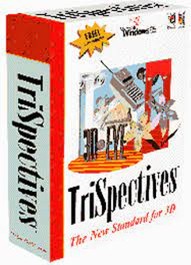
With an initial price tag of $300–500, TriSpectives did not catch on in the consumer market, but a number of companies in the ever-changing CAD field saw its potential and offered to buy 3D/EYE. Finally, in 1997, the company sold to Visionary Design Systems (VDS), based in Santa Clara, California.
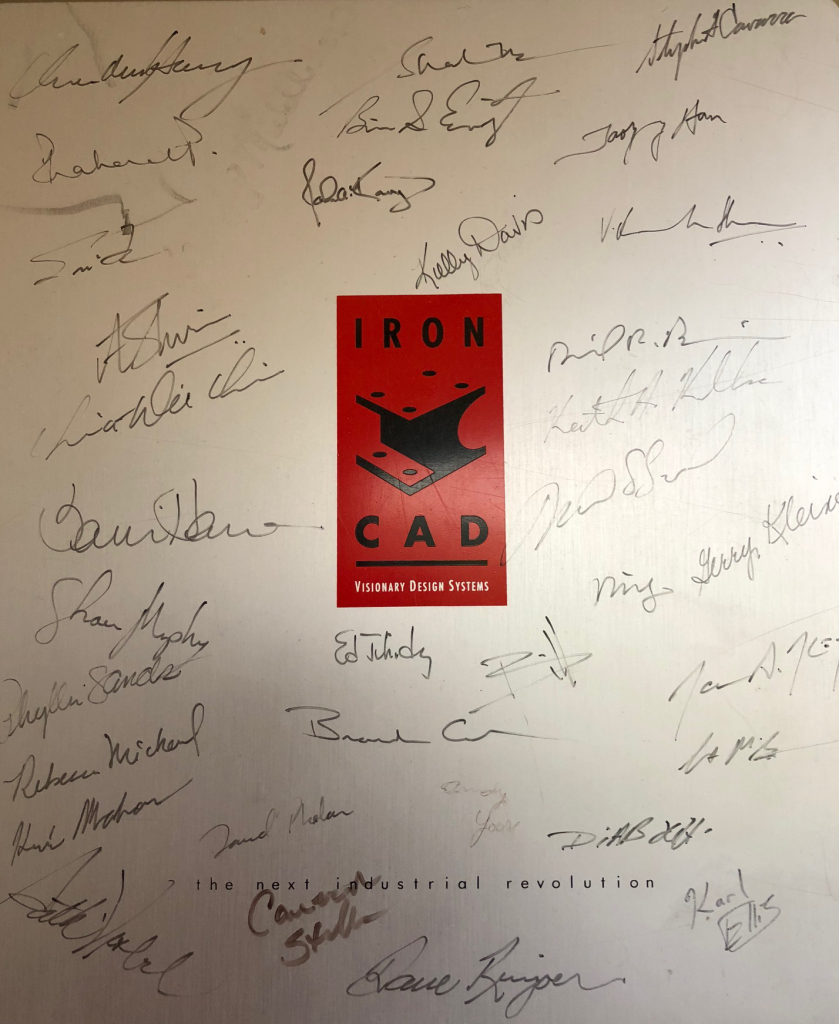
VDS, led by David Tiley, a former salesman at Hewlett-Packard, was a CAD/CAM reseller and systems integrator that saw the potential of using TriSpective's technology as the basis for a powerful, fundamentally different MCAD platform. It was this team at VDS that developed IronCAD took it to the NDES trade show in 1998.
"In developing IronCAD , Visionary Design Systems IronCAD and improved much of TriSpective's user-friendliness but added true geometric modeling under the hood," wrote Engineering Automation Report at the time. "The underlying method of building geometry is very powerful and unlike any other program on the market. This is probably the easiest program for quickly developing geometry; it really has to be seen to be appreciated."
While most users immediately appreciated the fundamentally different, intuitive design approach, equally important—but less noticeable—was IronCAD's other major advantage: its design flexibility. IronCAD switch between direct and history-based modeling from the outset, giving users unparalleled freedom to modify their designs throughout the development process.
At least one reviewer took note of this quiet but no less significant change in 3D design. "IronCAD built around the design flow so that designers don't have to change their way of working to use it," Design News noted in its review of IronCAD its first year. "Users don't have to worry about what will happen to a model's integrity when changes are made. As a result, designers can concentrate on developing and refining models, knowing that the inevitable changes can be easily implemented."
Today, other 3D CAD platforms attempt to cover similar areas, but the flexibility with which they switch between direct and history-based modeling is simply not as reliable as IronCAD's—even compared to the first release from 1998.
As with many aspects of IronCAD, such as drag-and-drop modeling, import capabilities, and dual-core support, IronCAD's technology has consistently been ahead of its time, predicting future directions for 3D CAD and solid modeling.
That is why the now defunct CAD magazine CADENCE's review of IronCAD's debut still rings true today, 20 years later: "With a combination of an innovative approach to 3D design, a large number of commands, speed, and stability, IronCAD should IronCAD by anyone entering solid modeling for the first time or considering expanding their current capabilities."
On March 19, 2001, it was announced that IronCAD had been formed as a spin-off from its then owner, Alventive. Former development manager Dr. Tao-Yan Han brought his design team from Santa Clara, California, back to Atlanta, Georgia, to continue developing all the ideas that had not yet been implemented at Alventive with IronCAD . IronCAD 5.0 was the first version released by IronCAD on October 17, 2001. At the same time, they also launched their online discussion forum, IronCAD .
November 10, 2025
In October 2025, some of IronCAD 's global resellers gathered for a meeting— IronCAD 2025 Global Reseller Summit— over three days in Stockholm.

We at Solidmakarna helped organize this event and also took the opportunity to invite our users to an open discussion forum on the last day.
Here is a video summarizing nearly 25 years with IronCAD , which was launched in connection with this event held in Stockholm.
If you enjoy listening to podcasts, IronCAD has IronCAD own - IRONCAST — where, among other things, development manager Cary O'Connor and others talk about the background to how the program was developed in the first episode.
Choose whether you want to listen with Spotify or via YouTube.
Episode 1 - Journey to Innovation

Answer: Here we publish tips, guides, news and solutions for those who work with IRONCAD and Design Data Manager (DDM). The blog covers everything from basic functions to advanced workflows, helping you to optimize your design work. You'll find examples of smart shortcuts, practical instructions, solutions to common problems, and best practices for product design, mechanical design, and product data management.
Answer: Our guides and tips are designed for both beginners and experienced CAD users. They are aimed at designers, engineers and project managers who want to work more efficiently with IRONCAD and DDM, improve the design process, reduce mistakes and save time in product development.
Answer: We regularly publish new articles when the software is updated, when new features are introduced, or when our users ask for solutions to specific problems. The blog is therefore a reliable source for keeping up to date and getting tips that make everyday CAD work easier.
Answer: Many of our instructions and tips work in multiple versions, but we clearly indicate if an article applies to a specific version. We strive to make the content useful for older versions as well, and also provide recommendations on how to adapt workflows to the version you are using.
Answer: Absolutely! If you can't find the solution in the blog, you can contact our technical support via solidmakarna.support. Our experts will help you with everything from installation and configuration to advanced features in IRONCAD and DDM, so you can solve problems quickly and efficiently.
Answer: Yes! We appreciate suggestions from our users. If you have questions, tips or want us to address a specific issue in IRONCAD or DDM , please contact us via our contact form and we will prioritize relevant topics in future posts.
Answer: The blog contains, among other things:
Practical step-by-step guides to help you use IRONCAD and DDM more effectively.
Productivity and workflow tips for faster design and construction.
Solutions to common problems encountered by users in CAD programs.
Updates and news on new features, versions and improvements.
Best practices for data management and project organization in DDM.
Answer: All tips and guides are directly applicable in daily work. For example, you can use shortcuts and smart features in IRONCAD to speed up modeling, structure files better in Design Data Manager, or follow our step-by-step solutions for specific problems that often come up in design projects.
Answer: We strive to ensure that all guides and tips are relevant to the latest versions of IRONCAD and DDM. We also clearly mark when a post applies to an older version, so you always know if the instruction is directly applicable to your system.
Answer: Yes! Many of our users share the articles with colleagues and use them as internal training materials. The blog is a great complement to formal training and helps teams learn features faster, avoid mistakes, and standardize workflows in IRONCAD and DDM.