Industries · Automation

Faster robotic cells with IRONCAD

IRONCAD is a comprehensive 3D CAD program. In the field of automation, it is used to build complete cells from suppliers' models and in-house parts—in a matter of hours rather than weeks.

Over 1000+ satisfied customersGF Machining Solutions logoLerocon logoSMC Automation logo
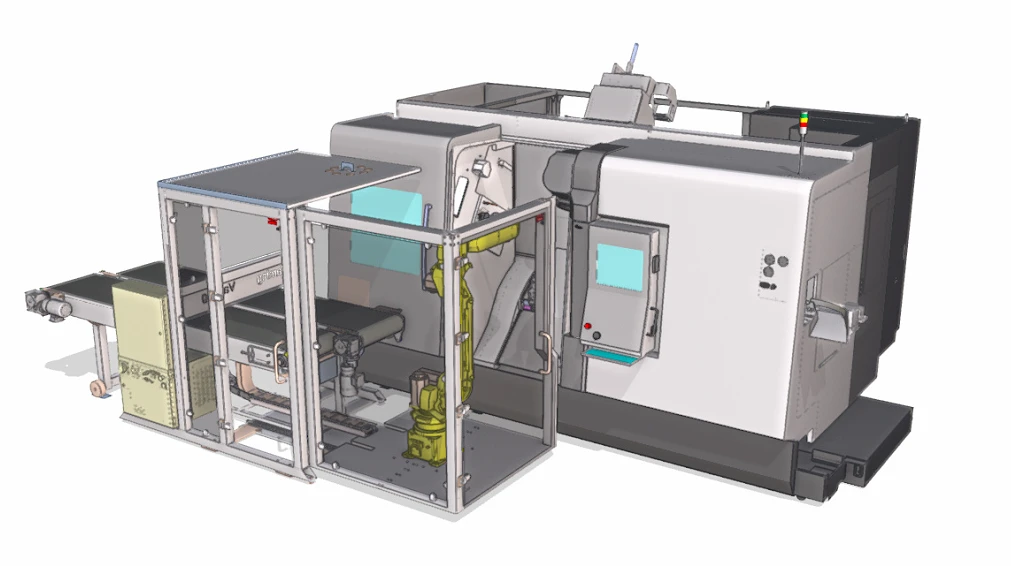
Robot CellRobot cell with a yellow robot loading a CNC lathe

The Program

What is IRONCAD?

IRONCAD IRONCAD is a 3D CAD program for industrial design, ranging from machinery and sheet metal to layouts and fixtures. What sets apart from traditional CAD systems is the freedom of choice: you decide for yourself how to model. Design freely using drag-and-drop and TriBall, add constraints and parametric dimensions only where they’re needed, and modify imported geometry directly without a history tree. These methods can be combined within the same , and the entire assembly is contained in a single file. This page shows how automation companies use it. part

Video · RVT Automation
RVT Automation, still from the film

RVT Automation

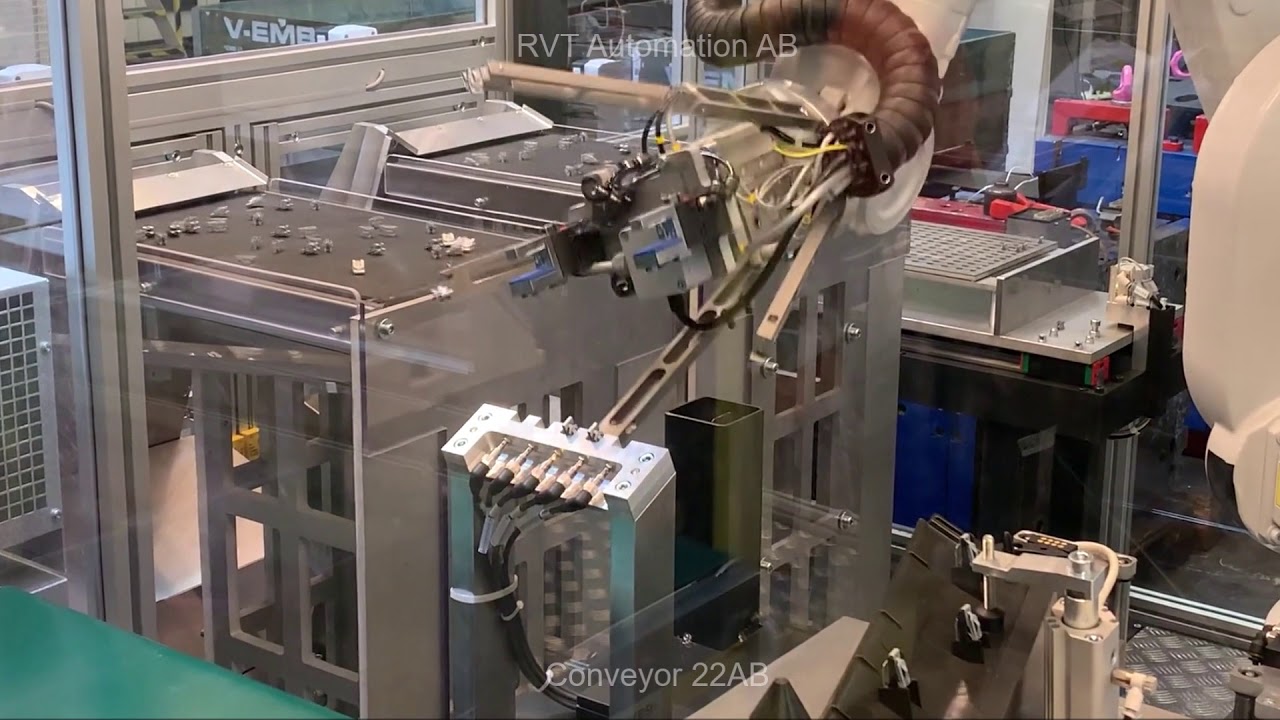
Robot cell with a vision system, designed in IRONCAD

The video shows a robot cell from RVT Automation: an ABB IRB 1600 with a vision system and feeder, designed at IRONCAD. RVT builds everything from large robot cells to small waterjet cutting fixtures at IRONCAD, where precision requirements are high. Would you like to see what your cell would look like at IRONCAD? Book a demo and we’ll show you!

Three approaches within the same model

You choose the method for each section, not for each program.
Alla tre fungerar i samma fil, och de kan blandas i en och samma cell.

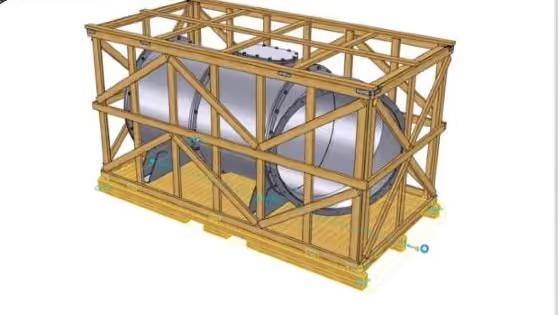
Still image from the film: a wooden box with a pallet and diagonal struts surrounding a cylindrical product, designed parametrically in IRONCAD4:54
3D box in vector format with a red X

Parametric modeling

For standard cells and grippers that require variant management. Lock the reach, heights, and pitch using constraints, and the next variant will be recalculated without you having to redraw it.

Most Popular
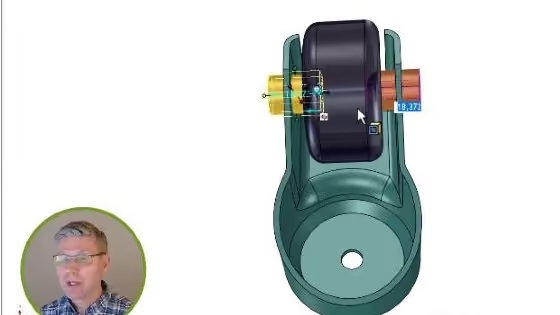
Still from the film: a detail is adjusted using a handle in the " IRONCAD ," while the " Solidmakarnas " instructor is visible in the frame28:02
3D box in vector format with a green check mark

Flexible modeling

The standard method for cell builders. Drag and drop robots, fences, and conveyor belts from the catalog, position them using TriBall, and rearrange them as the layout changes. No mandatory constraints.

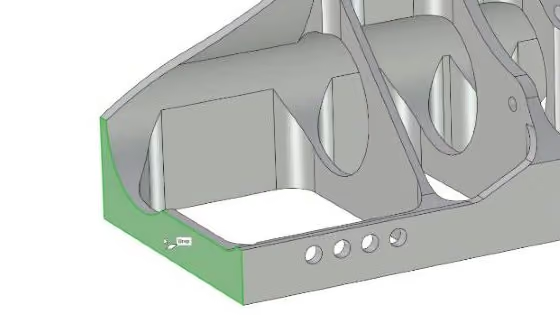
Still image from the movie: a surface on an imported cast part is highlighted in green and dragged directly into IRONCAD1:25
3D box vector with an open lock

Direct editing

For suppliers' STEP files of robots, machines, and feeders. Select a surface and drag, then add fasteners and holes. No history is required.

Workflow

How " IRONCAD " Is Used in Automation

From Idea to Finished Cell

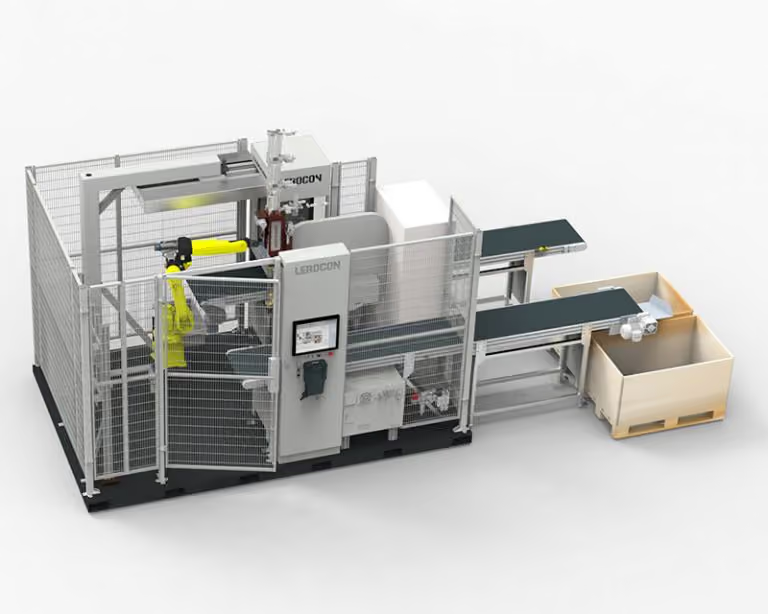
All the tools for a robot cell are available at IRONCAD. Import suppliers’ 3D models of robots, machines, and conveyor systems, and work with them as if they were created in IRONCAD. Supplement them with your own grippers, fixtures, and guards. The example is from Lerocon in Gislaved, which builds its automation solutions in IRONCAD.

Robot CellA robotic cell with a welding robot, conveyor belts, and safety fencing, designed by Lerocon in IRONCAD

Build the cell using drag-and-drop

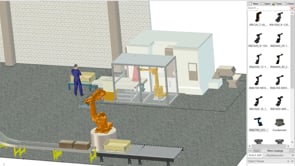
Save robots, machines, and fences in your own libraries. Drag the part in, drop it into place, and adjust the dimensions using the handles directly in 3D. Snap points ensure that the parts align correctly on their own. A new cell proposal takes a morning, not a week.

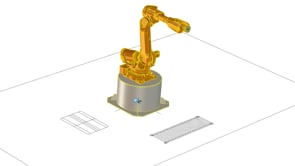
Animation · Robot is dragged in from the catalog · 0:21
A robot is retrieved from the catalog and placed in the cell; still image from the film

The robot is retrieved from the catalog and placed in the cell

Stock up on equipment from suppliers

Grippers, sensors, and feeders are retrieved as STEP files from the supplier and modified as needed, without a history. Place them in the catalog and share it over the network so that everyone has the same library. A 2D layout can be added as a reference. The entire cell is saved in a file and depicted on a drawing with a bill of materials.

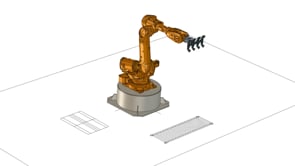
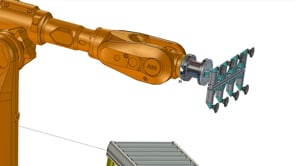
Animation · Gripper is mounted on the robot · 0:16
Gripper mounted on the robot; still from the film

The gripper is mounted on the robot

Test the range of motion and movement of mechanisms

We’ll provide you with catalogs featuring robots from ABB, Fanuc, and Kuka at no cost. The robots have defined joints, so you can see if the robot can reach a target and if the gripper will collide. Move it with TriBall, then try again. Errors are detected on the screen, not on the floor.

Learn more about Triball
Animation · Robotic Arm · 0:24
Robotic arm, still from the movie

Robotic arm

The catalogs work both ways

Everything you build in 3D can be exported to a catalog and reused in the next cell. The catalog file is shared with colleagues. Handle and TriBall provide full control in the X, Y, and Z axes, with the same precision in a gripper as in a layout spanning thousands of square meters.

Read more about catalogs
Animation · Robot Cell · 0:26
Robot Cell, still from the film

Robot Cell

Automation customers who design in IRONCAD

Makoro Automation: Custom Machinery and Robotic Cells Tailored to the Customer's Needs

Custom automation equipment in Färgelanda, ranging from assembly fixtures to complete production lines for the automotive, furniture, and food industries. IRONCAD since 2005: The layout from the quote becomes the design once the order is placed.

Read more about Makoro

It's simple, flexible, and has the features we need when, for example, we're preparing surfaces for 3D printing or CNC milling.

Henrik Häger, Makoro AB

RVT Automation: Robotics—from large robot cells to small waterjet cutting fixtures

Robot cells and custom-designed fixtures with high precision requirements. The designs are virtually tested in IRONCAD , and the bills of materials are generated automatically, which shortens delivery times.

Read more about RVT Automation

IRONCAD It makes it easy to design large robotic cells where precision is required. It saves a lot of time.

Oliver Bjurström, Design Engineer, RVT Automation AB

MARAB: From the initial layout to the detailed drawing in the same model

Automation and robotics in Mora since 1999, from layout and customer consultation to detailed drawings. The entire cell is contained in a single file until it’s time to link the parts.

Read more about Marab

A major advantage of IRONCAD is that a 3D file can contain as many parts and subassemblies as you want. We don’t need to link parts to separate files until we decide it’s time to do so.

Matilda Bastman, CEO, MARAB

ROBOTUNITS: Modular automation systems for a global market

Standardized and modular automation systems, ranging from conveyor belts to safety fences, with factories in Austria, Germany, Italy, the U.S., and Australia. IRONCAD since 2009, with about 20 licenses.

Read more about RobotUnits

You can design in 3D much faster than with standard programs, and it's so easy that even a 15-year-old can learn it in two days. We're very glad we chose IRONCAD back in 2009.

Johannes Schreiber, Engineering Manager, Robotunits

Lerocon: Welding Automation That Demands Precision

Bolt welding machines for robotic cells with high precision requirements. We switched from a constraint-based system to IRONCAD and now build the cells using drag-and-drop from our own catalogs.

Read more about Lerocon

We didn't have the flexibility to work in a single file for that specific project and then share the files externally whenever it suited us. That's why we switched to IRONCAD.

Lerocon AB

SMC Automation: Customized automation with the bill of materials included in the drawing

The world's largest manufacturer of industrial pneumatics. Custom valve cabinets are built using the " IRONCAD " method, with over 9,000 components that can be dragged and dropped, and are documented in drawings with a complete bill of materials.

Read more about SMC

We have found that it is far superior in terms of speed and ease of use compared to other 3D CAD programs. We have become more efficient and are saving a significant amount of time.

Pål Hallström, SMC Automation AB

More companies that use IRONCAD for design can be found in the customer case studies

Frequently Asked Questions About CAD for Automation

Can I import robots and machines from suppliers to IRONCAD?

Yes. STEP, IGES, and Parasolid files open immediately, and with the Translator add-on, SolidWorks, Inventor, CATIA, Solid Edge, NX, and Creo files open as well. Imported models can be moved, cut, and further modified as if they were created in IRONCAD.

Can I simulate the robot's range in IRONCAD?

Yes. The mechanisms in IRONCAD allow you to define joints and ranges of motion, so you can see whether the robot can reach all positions and whether the gripper will collide with fences or fixtures before the cell is built.

How does IRONCAD handle an entire cell with thousands of parts?

The entire cell, including imported machines, is contained in a single file without separate part files. Automation engineers work with tens of thousands of parts in an assembly while maintaining performance.

Can we create our own catalogs using our standard cells?

Yes. Robots, fences, conveyor belts, and fixtures are saved in their own catalogs with smart attachment points, so that the next cell can be built using drag-and-drop. Solidmakarna This helps with the basic structure.

How do we keep track of audits and customer files?

With Design Data Manager, every cell, component, and drawing is assigned a part number, revision, and searchable properties, regardless of whether the file comes from IRONCAD, SolidWorks, or Inventor. The entire team can find the correct version, and deliveries to customers can be tracked.